 Article de blog
What does PPWR mean for businesses?
The Packaging and Packaging Waste Regulation (PPWR) is changing the way companies across Europe approach packaging. Its goal is clear: reduce packaging waste, improve recyclability and reuse, and move towards a more circular packaging system. Today on the 12th of August it comes into force.
But what does PPWR actually mean in practice for businesses and their supply chains?
In this interview, Leontien Hasselman-Plugge, CEO of ImpactBuying, discusses the new regulation and its implications for the packaging industry. She shares insights into the key changes businesses need to prepare for, the challenges they may face, and the opportunities PPWR creates to build more sustainable packaging systems.
Watch the interview to understand what PPWR means today, how to oblige and how businesses can prepare for what comes next.
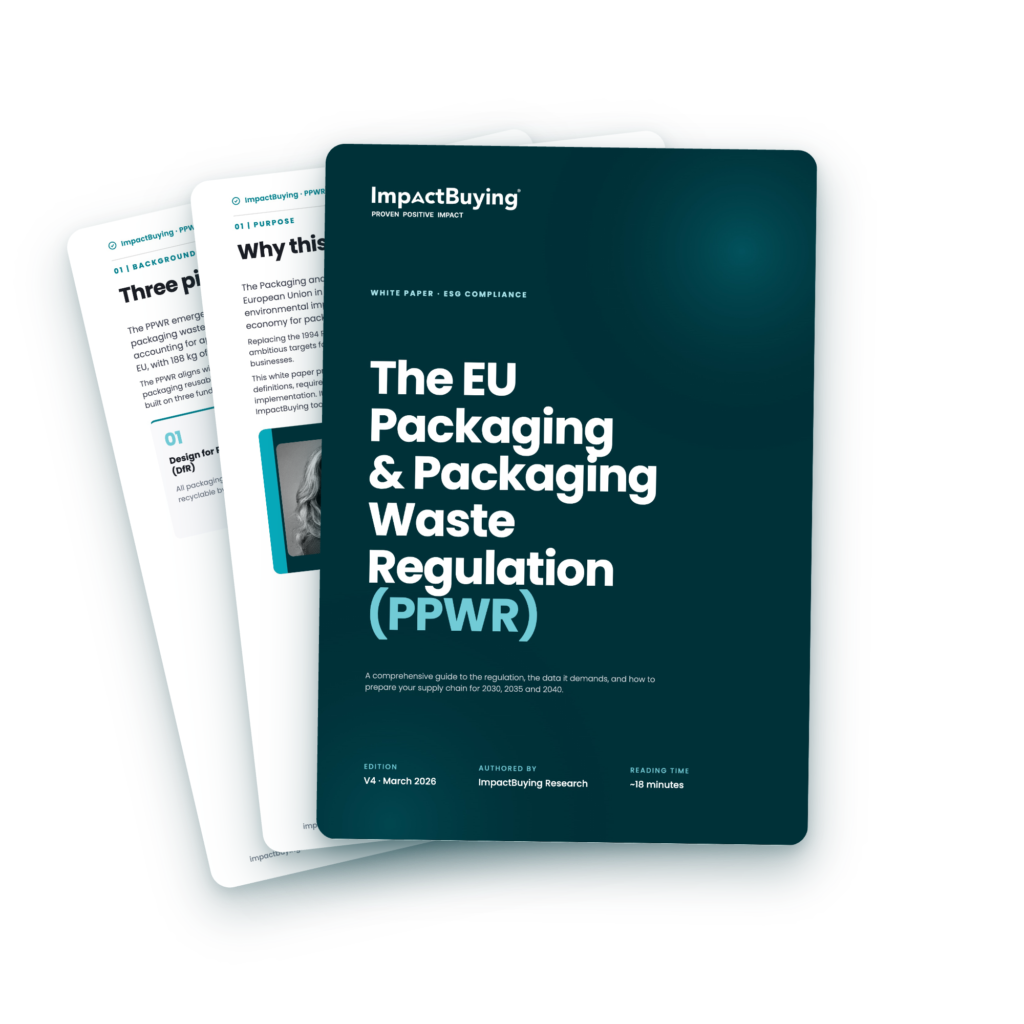
The Packaging and Packaging Waste Regulation is already in force, and the targets arrive in stages: all packaging reusable or recyclable by 2030, with tighter recycled-content and reuse thresholds through 2035 and 2040. Meeting them takes verified data from across your supply chain, and that takes time to gather. This whitepaper explains what the regulation asks of you, and what to put in place now:
- What the PPWR covers, and which obligations apply to your role
- The three pillars: design for recycling, recycled content, and extended producer responsibility
- Key deadlines for 2030, 2035 and 2040, and what each one requires
- The packaging data you need to collect, and where it comes from
- Consequences of non-compliance, and how to stay audit-ready
- A practical roadmap for getting your supply chain prepared
Know what PPWR asks of you.
Download the white paper.